Politics
Chicago Faces $882M Budget Gap in 2027, as Johnson Touts Smaller Than Expected Election Year Shortfall
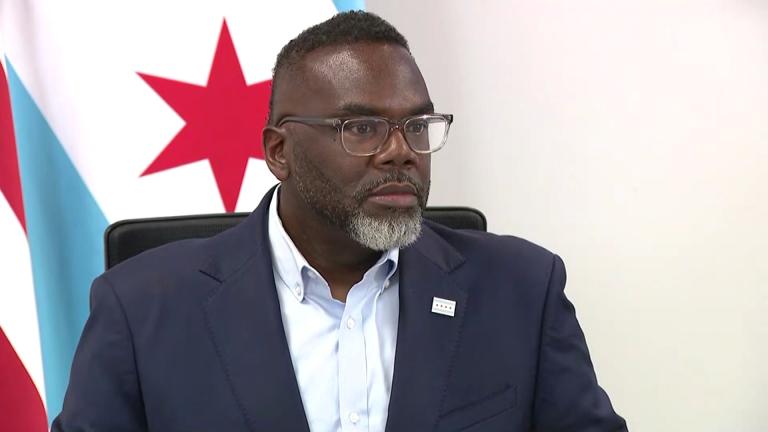
Mayor Brandon Johnson said Thursday Chicago faces a projected $882.4 million budget shortfall in the 2027 fiscal year, a smaller than expected gap during an election year.
That is more than 23% smaller than the $1.15 billion deficit that confronted city officials a year ago. Debate over how to fill that gap led to an intense confrontation between the mayor and a majority of the Chicago City Council, which approved a spending plan opposed by Johnson.
Read the 2027 Chicago budget forecast.
For more than a decade, Chicago’s financial woes have eased just months before the mayor and all 50 alderpeople faced the city’s voters, giving everyone just a bit more breathing room as they campaign for new four-year terms.
But Johnson told reporters the coming months will nevertheless be challenging.
“We have difficult and consequential decisions ahead of us as we work to address the structural financial challenges that have confronted Chicago for decades,” Johnson said.
Pressed by reporters, Johnson declined to rule out proposing a property tax hike to help close the deficit but said he would once again focus his efforts on raising what he calls “progressive” revenue to fill the city’s projected budget gap by taxing large firms and the city’s wealthiest residents.
“We will not balance this budget on the backs of working people,” said Johnson, who is expected to formally announce his bid for a second term on Sept. 13.
It is unlikely that the mayor would propose, or the City Council approve, a property tax hike just months before they face voters. In 2024, the City Council unanimously rejected Johnson’s proposal to increase property taxes by $300 million. During the 2023 campaign, Johnson had pledged not to hike property taxes.
Johnson said again that he would do everything possible to avoid layoffs or service cuts to bridge the gap. Any layoffs would likely hit the Chicago Police Department, the city’s largest and best-funded agency.
“The idea of having to cut first responders is not something that I nor the people of Chicago want to see take place,” Johnson said.
The mayor, who must detail his proposal to close the projected gaps in the city’s 2027 budget by mid-October, also declined to rule out once again asking the City Council to levy a per-employee tax on large companies. That proposal was rejected by the City Council during last year’s tense budget debate.
Johnson announced earlier this month he will refinance a chunk of the city’s massive debt to fill a budget gap of $85.1 million in the 2026 budget after a plan opposed by Johnson to sell $1 billion in debt owed to the city by individuals failed to generate any revenue, much less the $89.6 million the spending plan relied on.
Chief Financial Officer Ashlee Gabrysch told reporters that officials will make an additional $130 million payment into the city’s four underfunded pension funds by the end of September, resolving a monthslong dispute that exacerbated tensions between the mayor and his critics on the City Council.
Chicago officials put off that payment after Cook County officials announced the second installment of 2025 property tax bills would be delayed by two months.
Johnson, who neither signed nor vetoed the city’s $16.6 billion 2026 spending plan, allowing it to take effect, has repeatedly blamed alderpeople he said chose to align themselves with corporations over the people of Chicago for worsening the city’s financial condition.
However, the group of alderpeople who crafted the spending plan once again accused Johnson of failing to implement the city’s spending plan as required.
“While the Johnson administration works overtime to deflect from failures of its own making, the reality is straightforward — this administration abandoned Chicagoans on the most basic responsibility of governing: executing the budget,” according to a statement released by 39th Ward Ald. Samantha Nugent’s office on behalf of the group of alderpeople who have dubbed themselves the Budget Accountability Coalition. “They slow-walked multiple (fiscal year 2026) revenue measures that could’ve generated hundreds of millions towards reducing our structural deficit, then pointed fingers at everyone else for not getting the job done.”
Focus on Tax Increment Financing Surplus
The city’s budget forecast for 2027 estimates that Johnson will declare approximately $340 million in property taxes earmarked to fight blight to be “surplus,” according to acting Budget Director Jonathan Ernst who cautioned that projection could change.
With the City Council’s approval, $75 million of those surplus funds will be returned to the city and approximately $181.5 million will flow to Chicago Public Schools, with the rest going back to other taxing agencies, according to the forecast.
Because the CPS budget approved by the Chicago Board of Education for the 2026-27 academic year counted on getting $285 million in surplus TIF funds from the city, the city’s forecast means the school board is facing a new gap of more than $100 million.
CPS’ budget also relies on $150 million in state funding that is not guaranteed and has yet to materialize, records show.
In 2026, Johnson declared $1 billion in the city’s Tax Increment Financing Districts to be surplus, sending $550 million to CPS, temporarily easing the cash crunch at Chicago’s schools.
Chicago’s Budget Remains Structurally Unbalanced
The city’s 2027 budget is still structurally unbalanced, with expenses outpacing revenues, according to the forecast.
Chicago’s finances remain out of whack, pinched by soaring pension costs, spiraling personnel costs and a massive amount of debt.
Chicago’s economic future is not projected to improve significantly in the next two years, ensuring that whoever wins the 2027 election will be faced with red ink as far as the eye can see.
In 2028, the city is likely to face a budget gap of $943 million, and a gap of more than $1 billion in 2029, according to the forecast.
Chicago’s financial condition is once again imperiled by a looming economic slowdown, rising inflation and soaring energy prices, Comptroller Michael Belsky said.
The city faces a pension bill of more than $2.94 billion in 2027 in order to comply with a state law that requires two of Chicago’s pension funds be funded at a 90% level by 2055 and the other two by 2058, ensuring they can pay benefits to employees as they retire, according to the forecast.
That is $90.5 million more than last year, according to the forecast.
In addition, the Johnson administration’s forecast anticipates paying an additional $364 million into its pension funds in 2027 to chip away at the debt that has been accumulating during the past 20 years.
A majority of the City Council rejected the mayor’s proposal to pay just $120.8 million more than required into the city’s four pension funds in 2026.
In all, Chicago owes $36.4 billion to its four employee pension funds representing police officers, firefighters, municipal employees and laborers, according to the 2025 Annual Comprehensive Financial Report.
That has placed “tremendous” strain on the city’s finances, Johnson said.
The city will also pay $70 million more in 2027 than it did in 2026 to stay current on its debt, according to the forecast.
Cost of Police Misconduct Settlements Continues to Soar
Johnson said he would not ask the City Council to borrow to cover the city’s annual operating costs in 2027, as it did in 2026.
With the approval of the City Council, Chicago borrowed $166 million to pay firefighters what they were owed for working without a contract — and annual raises — for four years.
The City Council also agreed to borrow an additional $267.3 million to cover the soaring cost of lawsuits alleging Chicago police officers committed a wide range of misconduct — including wrongful convictions and improper pursuits.
Johnson’s budget forecast anticipates setting aside $401 million in the 2027 budget to resolve lawsuits, $226 million more than in 2026, Ernst said. The bulk of the city’s legal bills to go resolving lawsuits that allege Chicago police officers committed misconduct. The city’s 2026 budget set aside just $82.5 million to resolve police misconduct lawsuits, records show.
“The people of Chicago deserve the absolute maximum level of transparency around this matter because it has harmed so many different families and lives and has placed a stain on our city,” Johnson said.
Those funds will be used to resolve lawsuits alleging police misconduct dating back decades, and could be used to cover the cost of a new “global settlement” of claims relating to connected allegations of misconduct, according to the forecast.
“I’m prepared to have one of the most robust conversations around what we are actually dealing with, not just individual cases, but how it has had such a tremendous restraint on our budget,” Johnson said.
Lawyers for the city are negotiating a global settlement to resolve 17 lawsuits naming eight members of a Chicago Police Department tactical team repeatedly accused of improperly stopping and searching Black men downtown, WTTW News reported earlier this year.
Chicago taxpayers spent nearly $259 million in 2025 to resolve police misconduct lawsuits, records show.
That tally does not include the $101.3 million the city agreed to spend to resolve 184 lawsuits filed by Chicagoans who were wrongfully convicted based on what they allege was fabricated evidence gathered by former Chicago Police Sgt. Ronald Watts, who was convicted in 2013 of taking bribes, and other officers, as part of the city’s first-ever global settlement approved in 2025. Those payments were made in 2026, records show.
Corporation Counsel Mary Richardson-Lowry has refused to rule out a global settlement of lawsuits alleging misconduct by disgraced former Detective Reynaldo Guevara, but warned it will be more complicated because those convicted based on evidence gathered by Guevara and his testimony spent decades behind bars before being exonerated.
The total cost of defending and settling 13 lawsuits naming Guevara reached $159 million in February, records show.
Since then, agreements to settle three additional lawsuits naming Guevara have been reached, and await City Council approval, according to court records.